

Siem Reap, Cambodia
Home to Angkor, the sprawling complex of ruins that was once one of the largest cities in the world, Siem Reap is a place that is sure to unleash your inner-Indiana Jones. What to do in Siem Reap? Explore ancient halls and climb temple walls, discover intricate carvings and enormous smiling faces, and see where incredible banyan roots and sandstone relics compete for survival.
What To Do in Siem Reap:
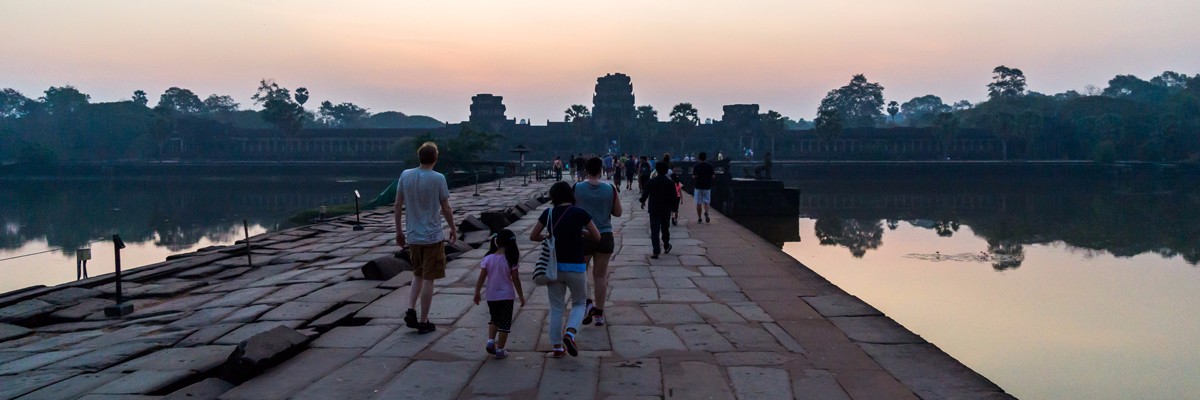
There’s really so much to do, this place could keep you busy for days. Here’s a list of our must-see’s when visiting Siem Reap.
First Stop: Angkor Wat!?
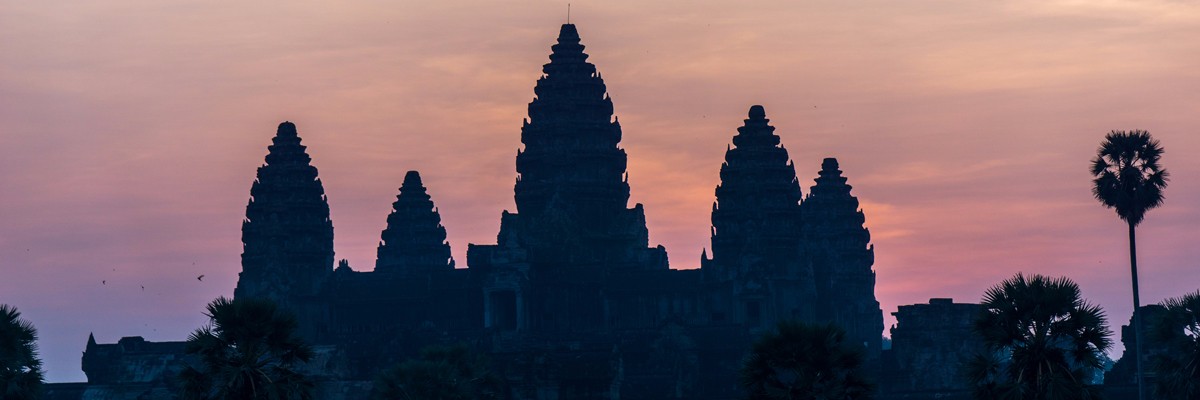
There’s no doubt that the UNESCO World Heritage Angkor Archeological Park is Siem Reap’s main draw. With countless, remarkably intact ruins spread over an area of 155 square miles, it’s easy to spend days here without seeing it all. Here’s everything you’ll need to know if planning a trip to see Angkor.
Getting Your Angkor Entry Pass
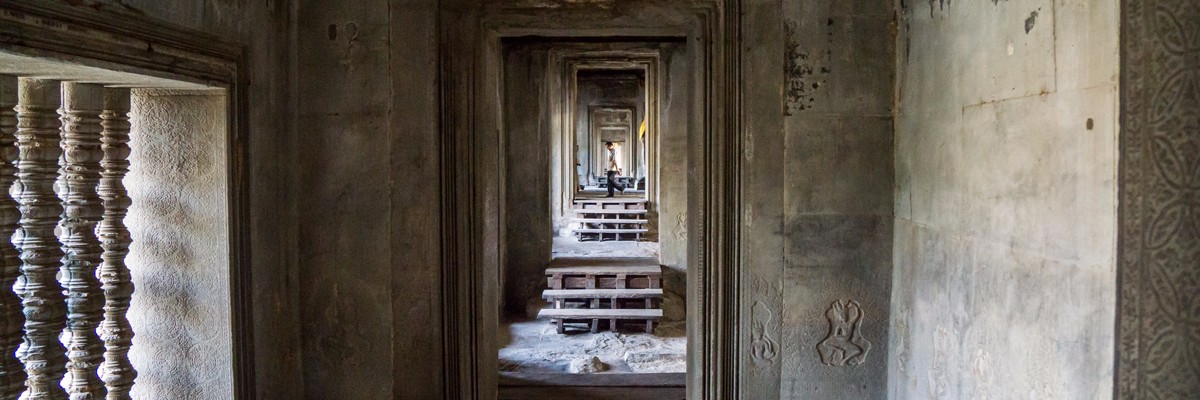
Passes may be purchased at the main entrance on the road to Angkor Wat. They are sold in one-day ($37), three-day ($62) and seven-day ($72) blocks that must be used on consecutive days. We recommend the three-day pass for the most bang for your buck and gives plenty of time to explore at a leisurely pace. No charge entry for Cambodians!
Getting Around The Angkor Grounds
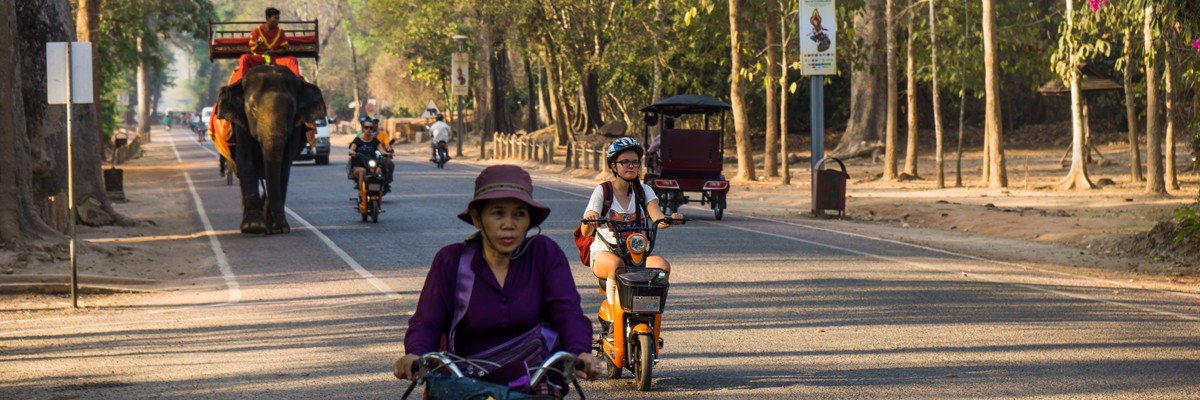
Angkor is HUGE, and trying to tackle this monster by foot would be a mistake. For around $25, you can hire a driver/guide to show you around the grounds, but we recommend seeing Angkor by tuk-tuk. It’s a slightly cheaper option at about $15 and adds a sense of authenticity to your Angkor exploration. For the best price and hotel pickup, set up your transportation the night before visiting Angkor.
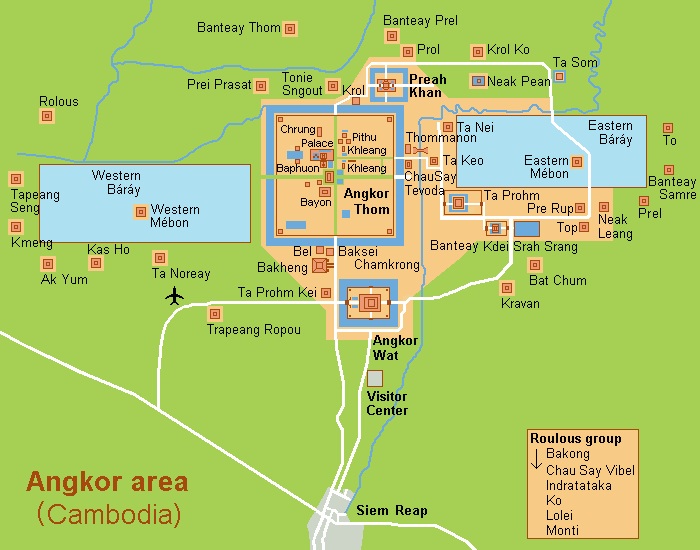
- Angkor Map
Things To Know Before Visiting Angkor
- Dress Code
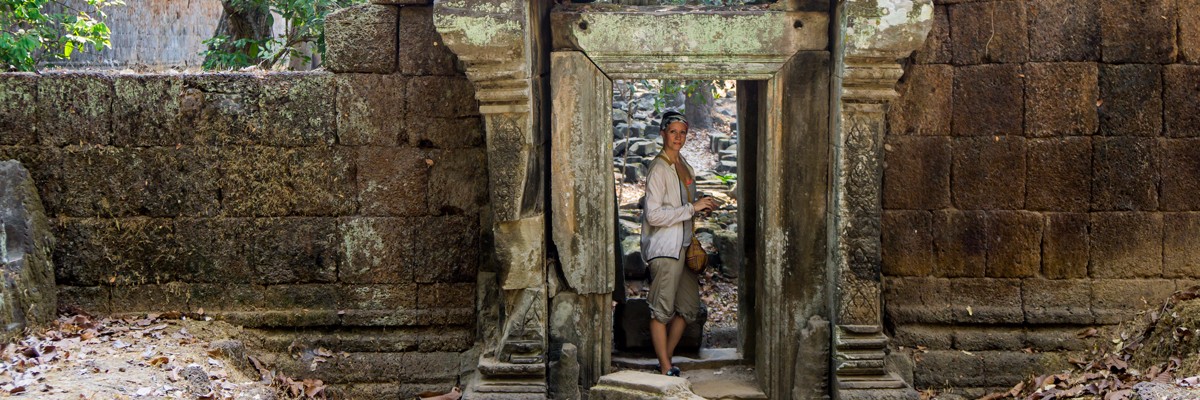
Angkor is one of the most visited sites in Southeast Asia, and at times there can be so many people that one might forget that these are sacred grounds for the local Khmer people. Yes, it gets hot.
No, you should never enter any of the temples or ruins without your shoulders and knees covered.
- Visiting Hours
Seven days a week, 365 days a year, the grounds are open to explorers. For those hoping to catch a glimpse of sunrise over Angkor Wat, you can enter the park as early as 5:00 am. The park closes each day at 6:00 pm.
The Angkor Temple and Ruins Shortlist
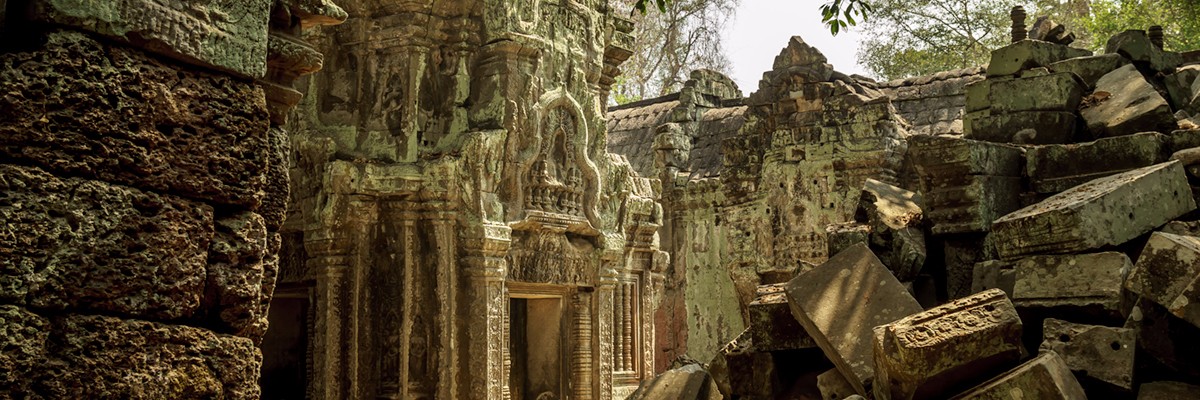
There are sooo many great temples to see, but here is our shortlist of Angkor ruins that should not be missed:
- Angkor Thom
The “Great City” was the capital of the Khmer Empire. Established in the 12th Century, the ruins measure over 4 square miles, all surrounded by walls and a giant moat. Inside are the remains of nine temples.
- Angkor Wat
Angkor Wat is the most famous temple complex of Angkor and is the largest religious monument in the world. Watching the sunrise over the five central towers is nothing short of magical.
- Elephant Terrace
The Elephant Terrace is also within Angkor Thom. One of the most popular sites in Angkor, this terrace is covered with carvings of giant elephants and was used by King Jayavarman VII as a platform from which to view his victorious returning armies.
- Bayon Temple
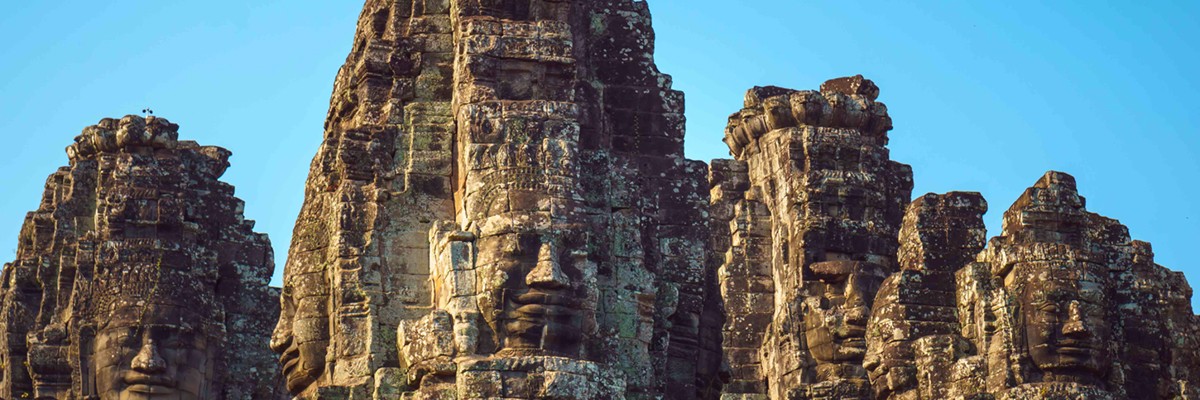
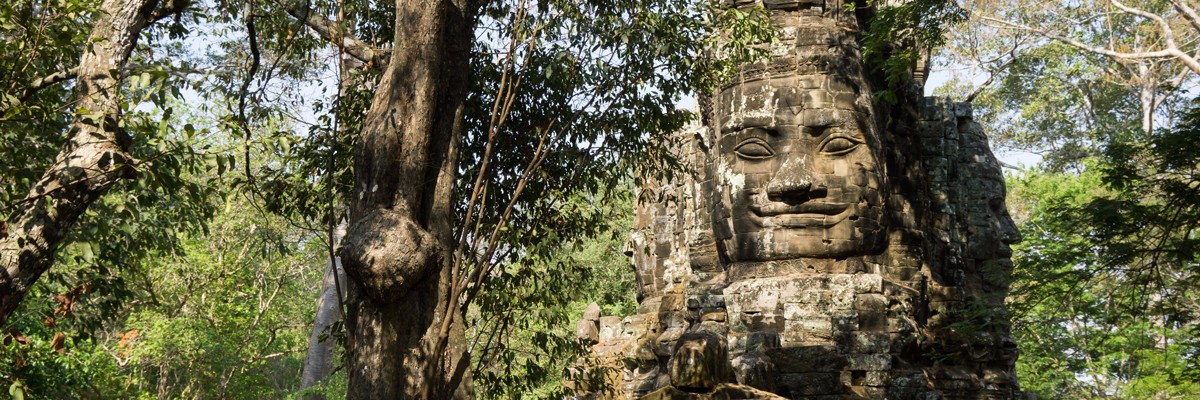
Bayon Temple is a large temple within Angkor Thom that is covered with countless giant stone faces, each smiling down from above.
- Terrace of the Leper King
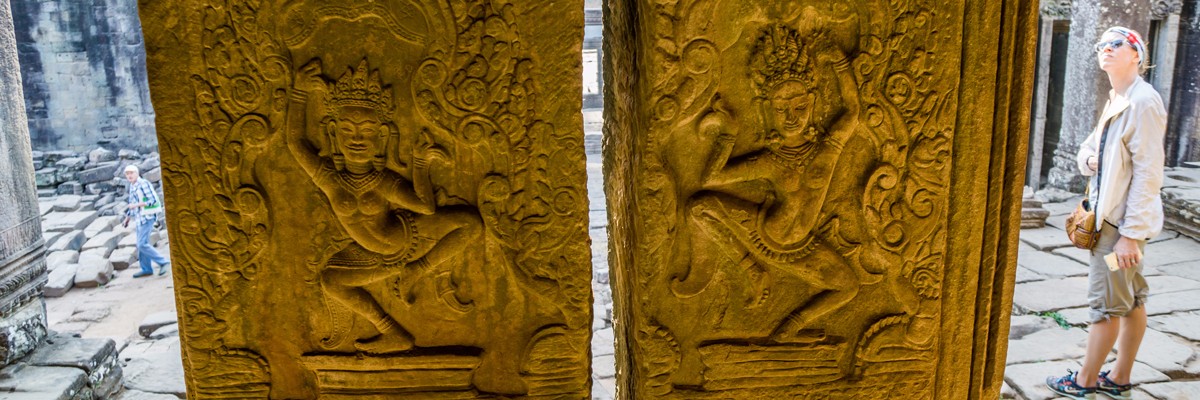
Also within Angkor Thom, look for the hidden passage in the Terrace of the Leper King, where the walls are covered with incredibly intricate carvings. Inside, find the carving of “The Seven-Headed Naga,” which is an important symbol used throughout Cambodia.
- Ta Prohm
Made famous in the movie “Tomb Raider”, Ta Prohm is an incredible temple where banyan trees grown on top of and through the walls. This temple was easily one of our favorites in Angkor.
Pub Street/Night Market
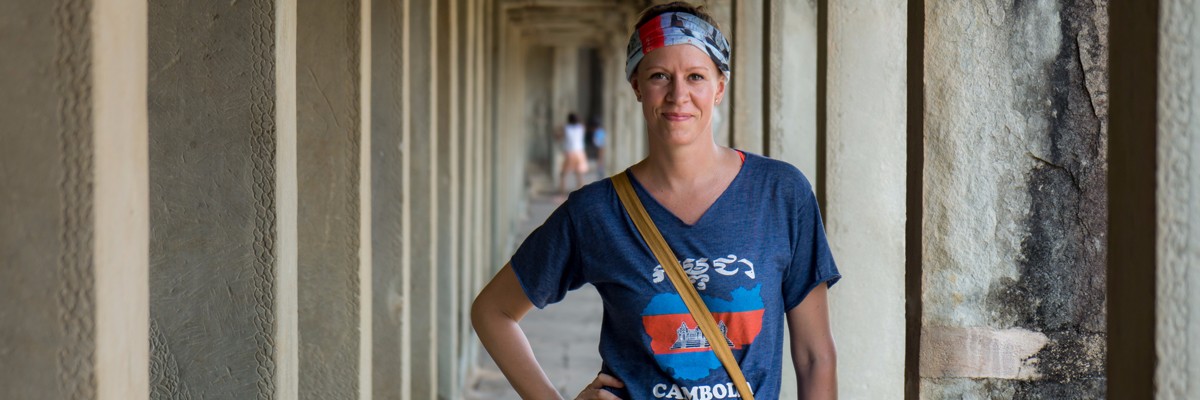
After a long day of exploration at Angkor, relax with food, drinks, or shopping in Siem Reap. Pub Street and The Night Market seem to be where everyone ends up in the evenings. BOGO happy hour specials abound, there are pedicures for $3, and we found great deals on t-shirts and cool knick-knacks made locally by the Angkor Handicraft Association.
Floating Village at Tonle Sap Lake **Controversial**
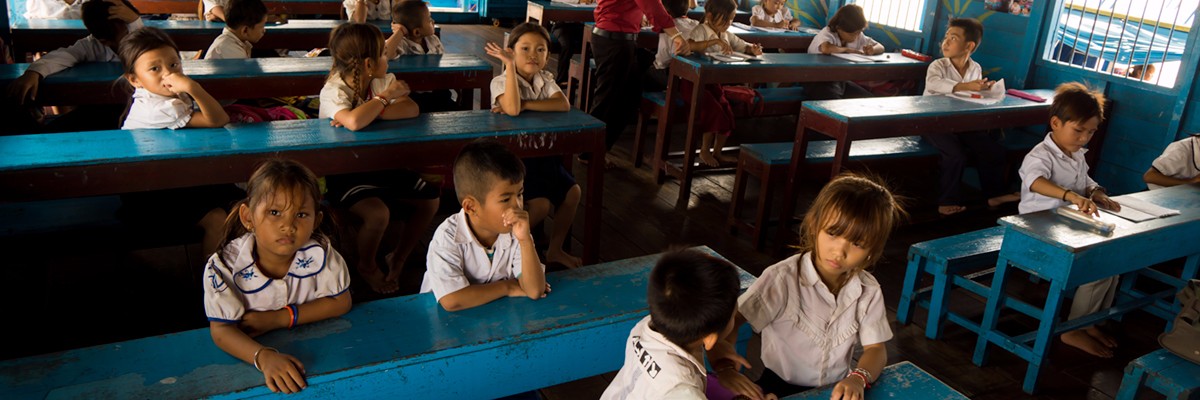
In order to get to the Chong Khneas floating village, take a 9-mile, $10 tuk-tuk ride from Siem Reap to the Tonle Sap Lake boat docks, then a $20/person, 40-minute boat ride to the village.
On arrival, you likely be taken to a schoolhouse for orphaned children and encouraged to buy overpriced rice for them. We did so ourselves, and when we met the children, it felt really great to help. Afterward, we passed on paying an extra $20 to take a tour of the village and headed back to shore.
A little research confirmed our suspicion that we may have gotten hustled. It seems as though the children don’t get the rice, and they just resell those bags over and over. The flip-side is that we were able to see people living in a traditional way, and they obviously need tourism for survival, hustle or not. We’ll leave this controversial excursion up to you.
Angkor Balloon
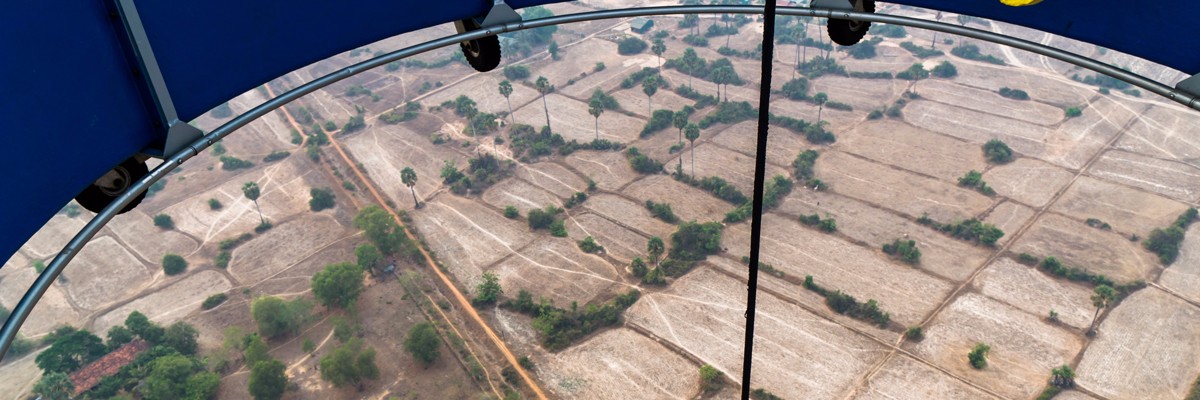
We imagined soaring majestically as the sun set over Angkor Wat. What we got was a 15-minute ride in a tethered balloon, just far enough from the park grounds that we could barely make out the temples. We regretfully paid $20 each for a ride that we’d probably pass on next time even for free…
Angkor Silk Farm
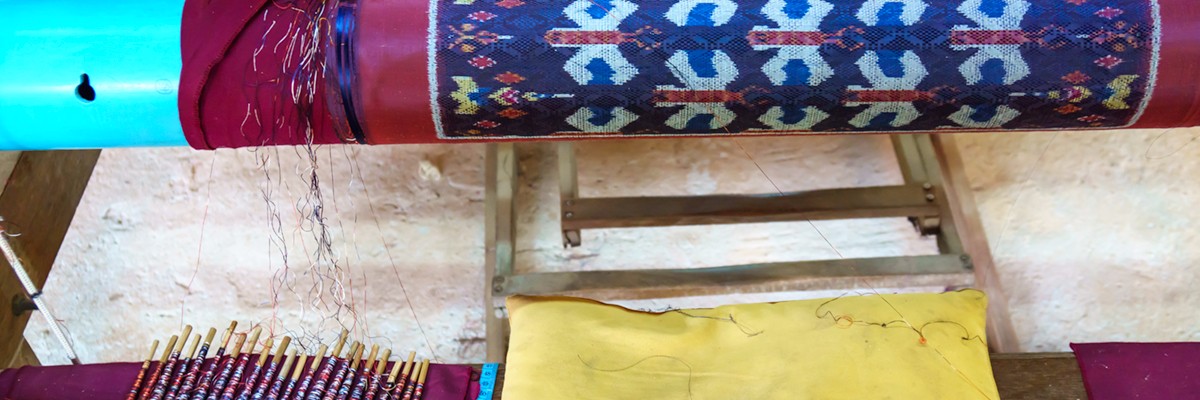
Visit the Artisans D Angkor silk farming complex in Siem Reap for a very cool free tour. See how they grow mulberry bushes for silkworms to feed on, then extract the silk from their cocoons! It’s like an episode of “How It’s Made”, from worm to pillowcase!
Book a Tour!
Getting to Siem Reap:
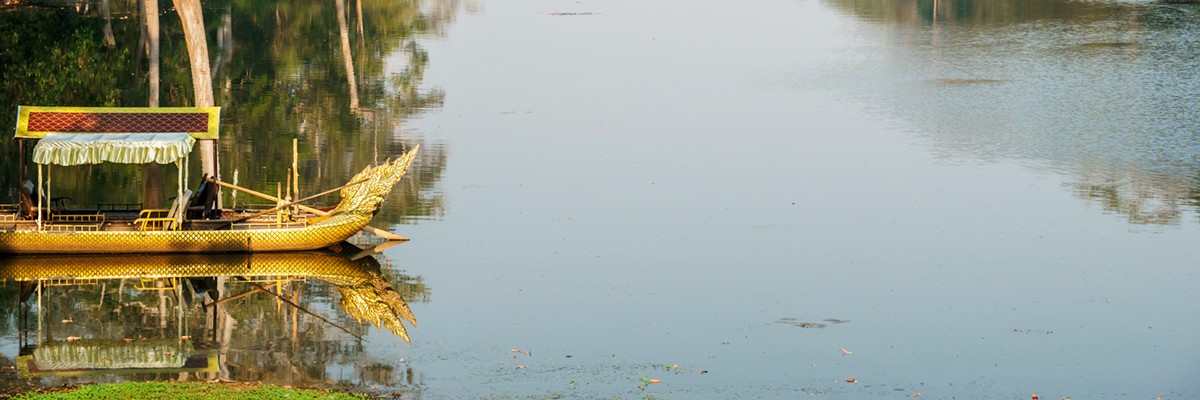
Getting to Siem Reap: FLY
Our recommended option for getting to Siem Reap. Short, inexpensive flights are available from Phnom Penh, Bangkok, and Kuala Lumpur, with one-way tickets ranging between $35-$50 with our favorite flight search site, Skyscanner.
Siem Reap Flight Deals

Getting to Siem Reap: BUS
Bus travel can be a more affordable way for getting to Siem Reap, although increases travel time dramatically. For example, the bus from Cambodia’s capital of Phnom Penh to Siem Reap bus is only $8 but takes 8 hours. From Bangkok, expect to pay about $20 for the 9-hour trip. From Ho Chi Minh City, it’s about $30 for the 12-hour bus ride.
Getting to Siem Reap: TRAIN
The Cambodian railways are being rehabilitated after 14 years without service. There are currently no train lines running to Siem Reap.
Airport to Siem Reap City Center
You can fly into Siem Reap International Airport, which is about 5.5 miles from the Siem Reap city center. How will you get there?
From Siem Reap International Airport:
Taxi/Uber
Find the taxi stand just outside of arrivals. Expect to pay about $10 for the 15-minute ride to the city center. Uber is not currently available in Siem Reap.
Motorbike
For the adventurous, walk through the airport parking lot and look for a motorbike taxi. Negotiate the price before hopping on, and expect to pay between $2-$6.
Tuk Tuk
You can purchase tickets for a tuk-tuk (kind of an open-air, motorcycle-powered carriage) for about $9 from the airport taxi desk. Although we recommend scheduling a tuk-tuk pick-up with your hotel, as the prices are generally cheaper and sometimes free. Also, if you like the driver, you can book them for taking you around Angkor and the rest of Siem Reap.
Getting around in Siem Reap
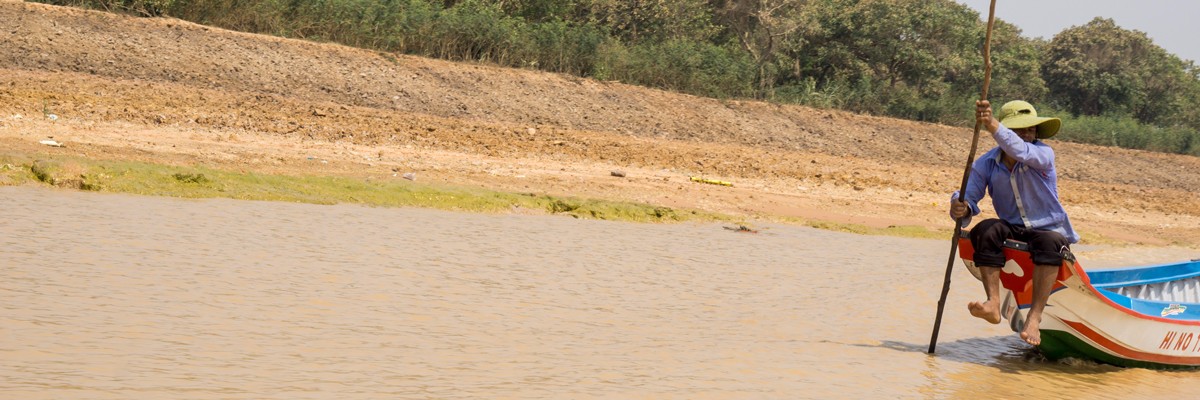
Tuk Tuk
Easily the most popular transportation for getting around in Siem Reap. They are affordable and easy to find anywhere.
Motorbike
For single travelers, moto-taxis are easy to find and slightly cheaper than a tuk-tuk.
Walk
Walkscore.com gives Siem Reap a score of 75, calling it a “Very Walkable.” We agree, if staying in the city center, Siem Reap is very walkable. Otherwise, you’ll likely need some transportation to get around.
Where To Stay in Siem Reap:
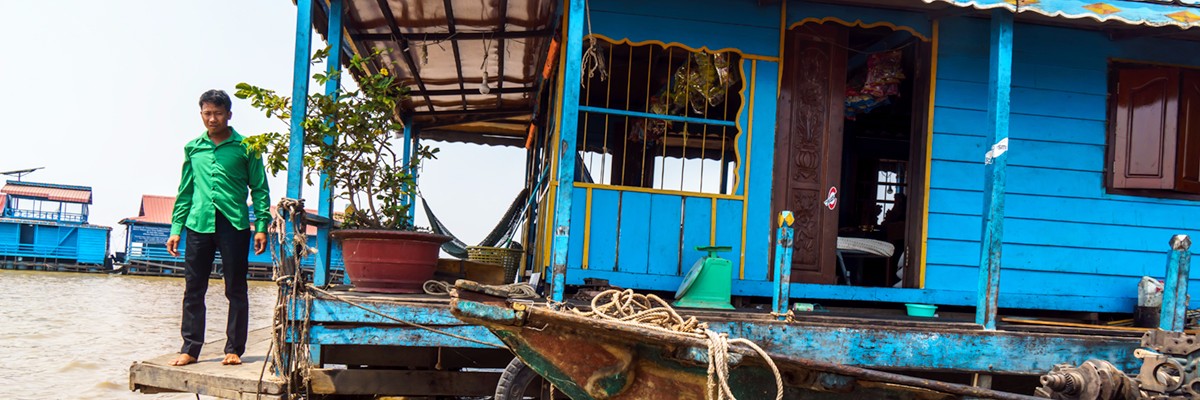
Where To Stay in Siem Reap: HOTELS
With prices ranging from $8-$181/night, from budget to luxury, you’re sure to find the right hotel in Siem Reap. We’ve found some great hotel deals using Priceline’s sister site, Agoda.com.
Siem Reap Hotel Deals
Where To Stay in Siem Reap: HOMESTAYS
A homestay is similar to a bed and breakfast, accommodations within a family’s home or in separate nearby quarters, usually including breakfast. We found a lovely homestay on Airbnb just outside of Siem Reap that we’d highly recommend for $35/night.. We had our own apartment surrounded by flowers and fruit trees, plenty of smiling faces, were served some of the best breakfasts we’ve had in SE Asia, and the friendly family tuk-tuk driver took us wherever we liked.
Where To Stay in Siem Reap: HOSTELS
There are many hostel options in Siem Reap. A popular, affordable option, prices generally range from $5-$10 per night. Hostelworld is our recommended resource when searching for hostels in Siem Reap.
Siem Reap Hostel Deals
Where To Stay in Siem Reap: AIRBNB
We love Airbnb! From private rooms to entire homes, there are plenty of choices when visiting Siem Reap. If you’re a first-timer with Airbnb, use this coupon and enjoy $35 off of your stay.
Packing for Siem Reap:
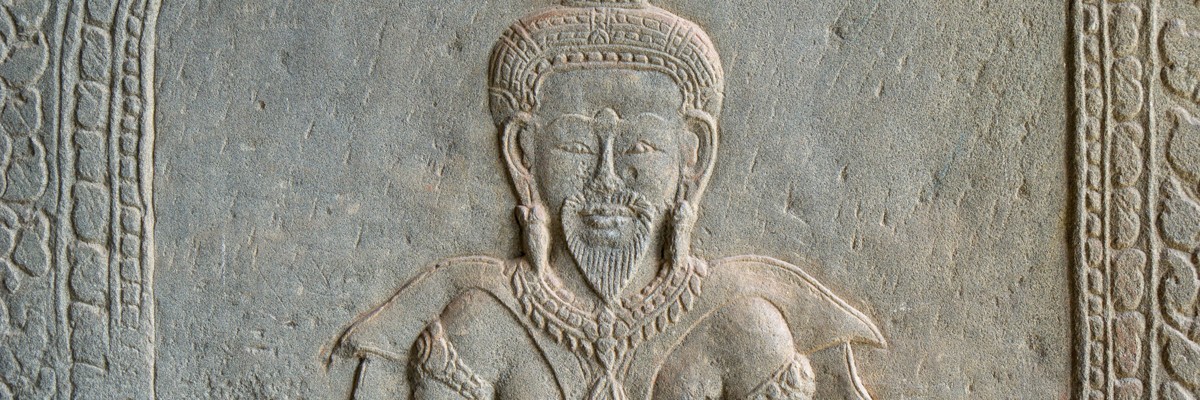
Adventure Gear!
Siem Reap is a clean and comfortable city, making it easy to relax after a long day of exploring, but with lots of walking on the agenda and year-round highs in the 90’s, it’s important to pack properly!
The Checklist:
– Insect Repellent
– Sunglasses
– Sunscreen
– Hand Sanitizer
– Headband or Hat
– Comfortable, sturdy shoes
– Headlamp for early morning at Angkor Wat
– Diarrhea Meds
– Camera
Siem Reap Travel Tips:
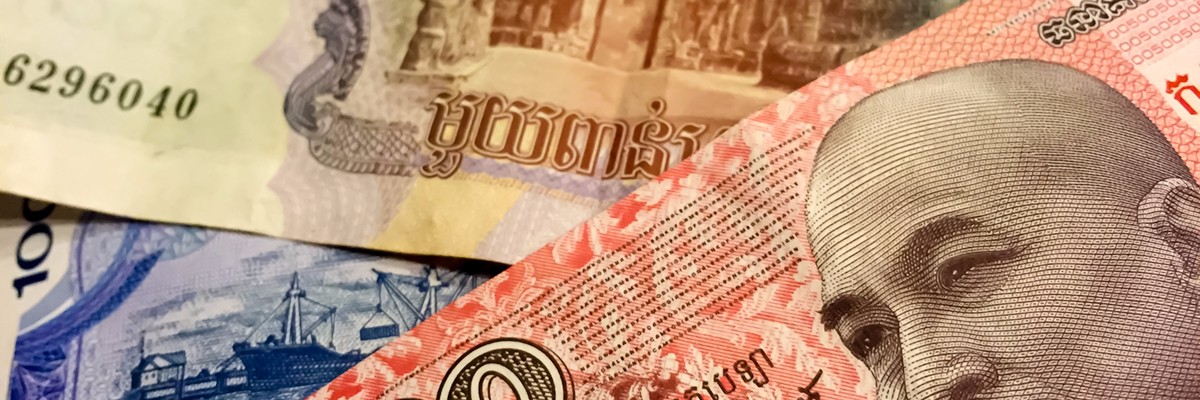
Siem Reap Travel Tips: Money
Cambodia’s national currency is the Riel, which is currently exchanging at just over 4,000 to 1 USD. Both currencies are widely excepted in Siem Reap, although surprisingly USD is preferred. Prices are generally listed in USD at gas stations, groceries, restaurants and ATM’s even dispense USD. Riel is basically used for purchases or change less than $1.
Siem Reap Travel Tips: Tipping
Tip tour guides $10-$20/day per traveler if not working independently. Tour drivers should get $5/day. $1 for taxis. House-keepers get $1 per day, and restaurant servers should get $1 per diner.
Siem Reap Travel Tips: Insurance
Traveling through Siem Reap is exciting and safe, but you never know when some good travel insurance could come in handy. World Nomads offers the best coverage in the business, is affordable, and is quick to act should something go wrong. For more info, check out our recent World Nomads blog post.