

A walk through this jaw-droppingly beautiful city might call for a Budapest history lesson.
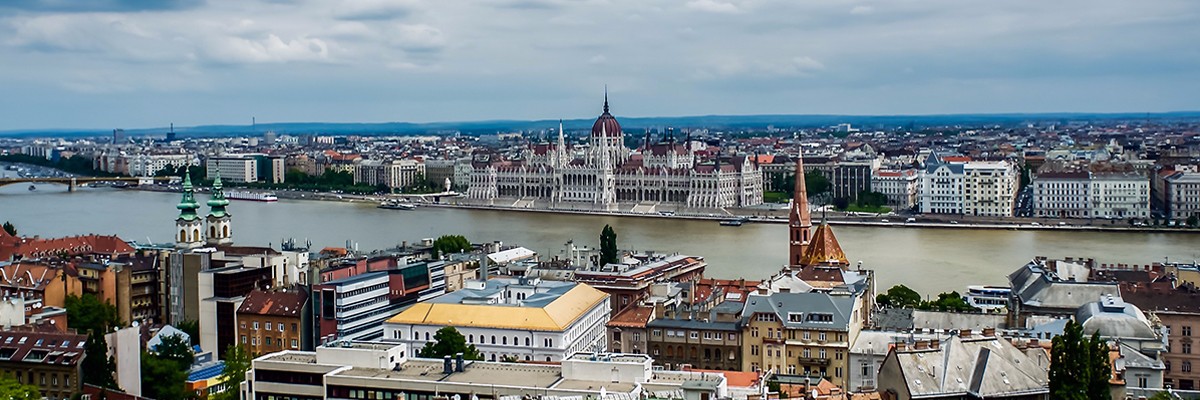
We walked over ten miles on our first day in Budapest and the city exudes class and charm. We were amazed at the overall architectural elegance of the city, rivaling that of Prague or even Paris.
But the more we walked, the more we became perplexed… How could a city boasting such extravagance be such an affordable place to visit? Our palatial rented flat cost a mere $60/night, meals for less than $5, and an entire grocery list for less than $30?
I began researching Budapest history and the economy of Hungary. Before I knew it, had entered a socio-political rabbit hole. The reasoning “why things are the way they are” in any country? It’s complicated…
Beginnings of Hungary and Budapest
A federation of semi-nomadic tribes settling in the Carpathian Basin established Hungary in 895AD. In 1000AD, Pope Sylvester II crowned Stephen I the first King of Hungary. Over the next five centuries, the Kingdom grew to control much of central and eastern Europe.
But in 1541, the Kingdom of Hungary was conquered by the Ottomans, splitting the lands into Ottoman Hungary, Habsburg Hungary, and the Principality of Transylvania. The Ottomans occupied the central portions of divided Hungary for the next 140 years, converting much of the population to Islam. Although in 1718, the Ottomans were forced out by the Holy League army, incorporating the entire Kingdom into the Christian Habsburg Empire.
The Austrian Empire was founded in 1804 by the Habsburg monarch Holy Roman Emperor Francis II, combining the Habsburg Empire (including the Kingdom of Hungary) with personal lands from the Holy Roman Empire. In a fight for independence, the Hungarians revolted in 1848 but were defeated within a year. Consequences were harsh, and Hungary fell under military dictatorship. Conditions were harsh and even Hungarian history was banned from schools. But after being defeated in the Austro-Prussian and Franco-Austrian Wars, the Austrian Empire was forced to reconcile with Hungary in order to survive.
The Austro-Hungarian Compromise of 1867 formed a new country called Austria-Hungary and granted a certain level of autonomy to the Kingdom of Hungary. In 1873, the cities of Buda, Pest, and Obuda officially merged as the metropolis of Budapest, and the city’s architecture began to bloom as we still see it today. Ethnic Hungarians began mass-migrating to Budapest and the population shifted back from 64% German ancestry in 1867, to nearly 86% Hungarian by 1910.
World War
In 1914, Archduke Franz Ferdinand of Austria was assassinated in Bosnia. In turn, Austria-Hungary declared war on Serbia, which caused Russia to declare war on Austria-Hungary. Things escalated quickly, and Germany declared war on Russia and France. Long story short, World War I, and Austria-Hungary lost the war. Austria-Hungary dissolved, and Hungary declared itself the independent Republic of Hungary. In post-war reparation, Hungary signed the Treaty of Trianon in 1920, relinquishing 71% of the territory, including 66% of the population.
It wasn’t long before the wheels of WWII started turning. After a series of aggressive moves, Nazi-Germany and Fascist Italy arbitrated the First Vienna Award in 1938 and Second Vienna Award in 1939, returning a large portion of lost territories back to Hungary. Later in ’39, Hungary contested the First Slovak Republic in an eight-day war, regaining another piece of ancestral land. Then in 1941, Hungary joined the German invasion of Yugoslavia and won back more territory lost in the Treaty of Trianon.
Later in 1941, the Prime Minister of Hungary declared war on Russia without Parliament’s approval and entered WWII on the side of the Axis powers. But by 1943, already suffering nearly 200,000 casualties, and Soviet forces knocking on the door, Hungary made a plea for surrender to the Allies. Hitler was notified, and feeling spurned, launched an occupation of Budapest. In December of 1944, a million-man Soviet army surrounded Budapest, beginning the two month Siege of Budapest. Much of the city was destroyed, the Nazi army was expelled and Hungary surrendered. All said and done, the city was ruined and WWII had cost over 750,000 Hungarian lives.
Communism
In 1947, Hungary signed the Paris Peace Treaty and borders shrunk back to those outlined in the Treaty of Trianon in 1920. The Soviets continued to occupy Hungary after the war, deporting an estimated 600,000 citizens to Soviet labor camps, one-third of which died in captivity. The Warsaw Pact was signed in 1955, officially making Hungary a Communist State of the Soviet Union.
But in October of 1956, protesting students were fired upon, starting a chain of events spurning the Hungarian Revolution of 1956. Two weeks of violent protests and an impromptu Hungarian government arose, promising withdrawal from the Warsaw Pact and free elections for all. The violence subsided, but within weeks a large Soviet force invaded Budapest and crushed the revolution. Twenty-five hundred Hungarians were killed, including the new governmental leader, and another 200,000 fled the country as refugees. After the uprising, conditions were considered generally better than in other Warsaw Pact states, but Hungary would remain under Communist control until the fall of the Soviet Union in 1989.
Today
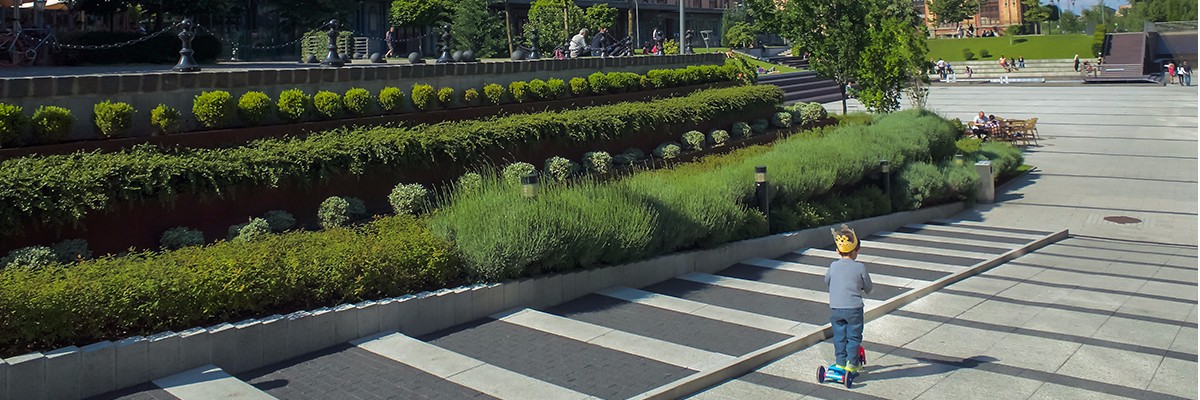
Fast forward thirty-five years, Budapest enjoys an unmatched reign of independence in Hungarian history and has blossomed into a vibrant, beautifully modern city. Recently named “The Most Livable City in Central European” by EIU, “The World’s Second Best City” by Conde Nast Traveler, and “Europe’s Seventh Most Idyllic Place To Live” by Forbes, it looks like things are looking up for Budapest! Our advice? Get here quick, before the whole world catches on.